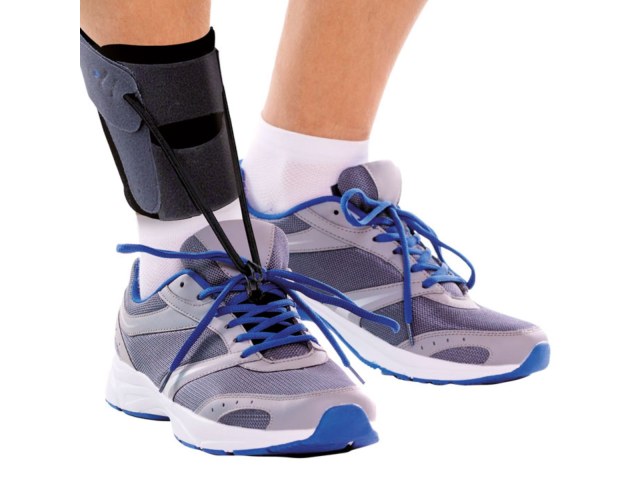
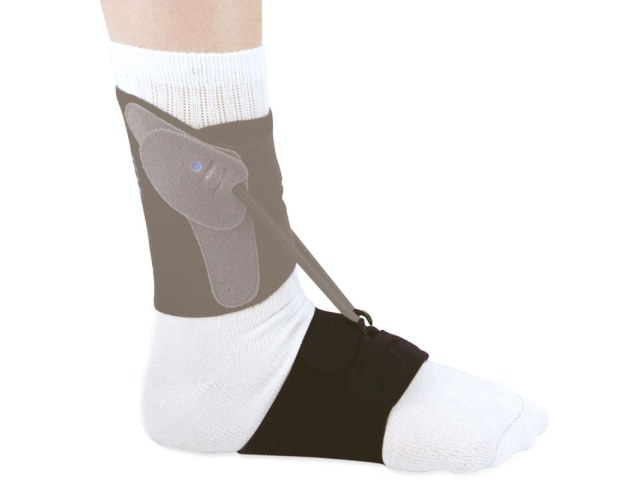
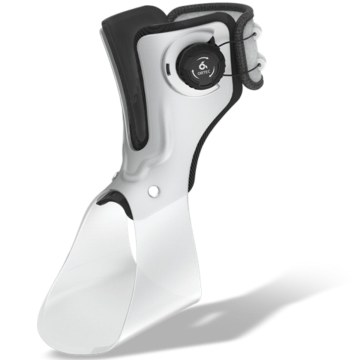
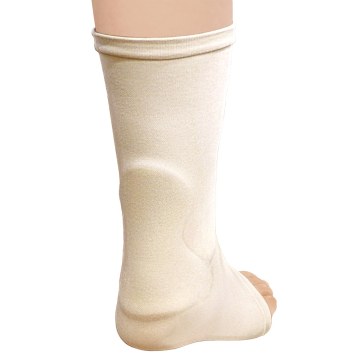
The PRIM AIRMED “DROP FOOT” orthosis (Ref. ATX01) is an ambidextrous aid designed for lace-up shoes only, using an adjustable elastic link between an ankle strap and a non-slip shoe pad to support forefoot lift during walking.
Features (PRIM AIRMED “DROP FOOT” Orthosis / Ref: ATX01)
It consists of two separate parts: a supra-malleolar ankle strap and a non-slip shoe pad with a central hook positioned between the shoe tongue and the laces.
Both parts are connected via an adjustable elastic to set higher or lower traction for greater or smaller flexion.
The back area of the strap includes an inner gel pad, and the instep zone is padded to reduce friction and unwanted compressions.
The design is discreet and flexible and does not add bulk inside the shoe during fitting.
It is ambidextrous, suitable for left or right foot use.
It is intended for lace-up shoes only.
Technical Specifications
- Brand / Manufacturer: PRIM (AIRMED)
- Reference: ATX01
- SKU (Biomed): 0802659
- Warranty: 1 year
- GTIN-14: 08426680049573
- EAN-13: 8426680049573
- Shoe compatibility: lace-up shoes only
- Package contents (ATX01): Ankle Pad (ATX12), Shoe Support, Hooks (ATX14)
CE & ISO certifications: not specified.
| REF |
Size |
Ankle circumference (cm) |
| 0802658 |
XS |
13 – 17 |
| 0802659 |
S |
17 – 21 |
| 0802660 |
M |
21 – 25 |
| 0802661 |
L |
25 – 29 |
Frequently Asked Questions (FAQ)
What do the ankle-circumference numbers (13–29 cm) mean in practice for sizing?
Measure your ankle circumference in cm and choose the size range that includes your measurement (for example, 17–21 cm for size S). If you are exactly on a boundary between two sizes, the manufacturer does not specify a strict “size up/down” rule, so verify fit before relying on it for daily use. Note: ATX01 is for lace-up shoes, so shoe compatibility must be checked before purchase.
When is this strap & shoe-pad design a better choice than a rigid ankle-foot brace?
It can be preferred when you want a flexible, discreet design that fits inside a shoe, with traction adjusted via an elastic link. A key criterion is having lace-up shoes with enough space at the tongue/laces for the hook pad. Limitation: it is not suitable for slip-on shoes or footwear without laces.
Which companion purchase makes sense and why?
A set of replacement shoelaces and/or a lace-up shoe with a more stable tongue can help keep the pad correctly positioned between tongue and laces. Selection criterion: choose lace length that matches the shoe’s eyelet count so it ties securely without excessive tension. Caution: ensure the lacing pattern does not create local pressure points on the instep once the pad is added.