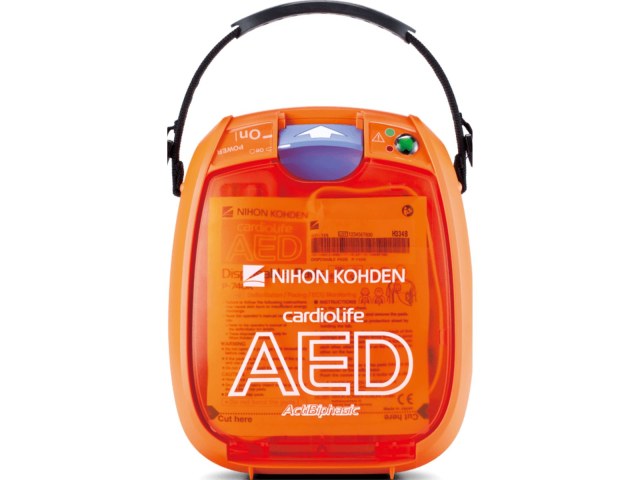
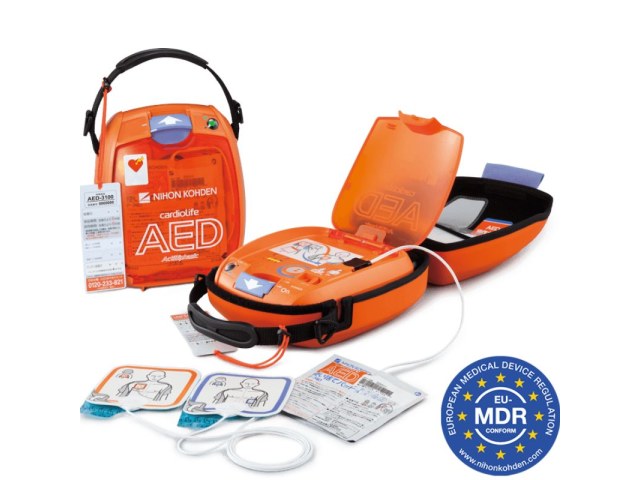
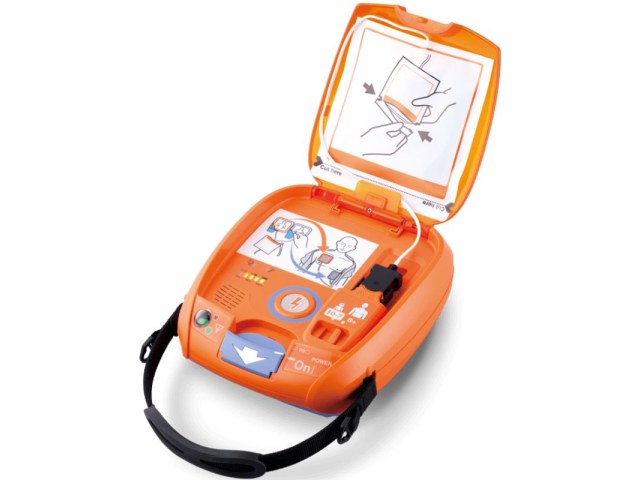
Features (Cardiolife AED-3100)
The 3-step workflow supports a consistent routine: open the lid, attach the pads, and deliver energy when the device prompts the user.
The adult or child mode switch adjusts the energy profile so one AED can be used across different settings without changing the basic handling steps.
Daily and monthly self-tests support routine maintenance by checking battery status, pads and key circuits for clear readiness monitoring.
Continuous VF and VT analysis supports the AED decision process so the user can follow guided steps during an incident.
The IP66 protection rating helps with placement in shared-access locations where dust and water resistance are needed.
ECG and event recording up to a total of 90 minutes supports post-use documentation, with capacity for up to 3 cases.
Bluetooth data transfer supports organised archiving and device maintenance tracking on a PC.
Frequently Asked Questions (FAQ)
Why is the Cardiolife AED-3100 a practical choice for shared-access locations?
Voice prompts and visual guidance, together with a clear 3-step workflow, support a consistent routine when the AED is installed in workplaces or public areas and may be used by different people.
How do self-tests help day-to-day readiness and maintenance?
Daily and monthly self-tests check key items such as battery status, pads and core circuits, helping maintenance teams spot early when consumables or technical inspection may be needed.
When is event recording and Bluetooth transfer especially useful?
Up to 90 minutes of recording and Bluetooth transfer support organised post-use documentation and device management, especially when a facility needs structured incident files and maintenance tracking.